




HP’s subscription programs come at you like a friendly NPC with a glowing quest marker: hand over a steady stream of cash and we’ll keep your rig patched, insured, and upgrade‑ready. The consumer plan promises portability, 24/7 support, and next‑business‑day replacement; the OMEN plan swaps the sensible shoes for RGB, louder fans, and higher‑tier GPUs bundled with gaming accessories. Both sell the same core promise — access, uptime, and convenience — and both quietly keep the title to the machine. You get the box, the support line, and the option to trade up after a year; HP gets the recurring revenue and the secondary‑market inventory. It’s a neat little service if you hate downtime and love the idea of always having the latest silicon, but it’s not ownership. Think of it as renting a raid‑ready PC with a concierge rather than buying a sword you can keep, sharpen, and sell.
Those monthly numbers are engineered to look like pocket change until you actually do the arithmetic. A consumer plan that reads like a snack purchase becomes roughly $420 a year and nearly $840 over two years, and OMEN tiers start at levels that, when multiplied, quickly match the sticker price of a new high‑end gaming laptop. Laptops, especially gaming rigs, take a savage haircut in year one — commonly 40–60% — so a $1,200 machine can often be found used for roughly $480–$720 after twelve months. If you plan to keep a laptop for multiple years, buying outright or financing to ownership usually wins on total cost per year of useful life. If you need zero downtime and want to chase the newest GPU every year, subscription buys you that peace of mind — at a premium. The subscription is effectively paying for insurance, instant replacement, and upgrade convenience; the retail or used route buys you an asset you can resell, mod, or flog on a forum when you’re done.
Caveat about RAM and memory pricing: don’t forget that the used market and upgrade economics are not static. RAM and SSD prices can swing with supply shocks, crypto cycles, and factory hiccups, which affects both the resale value of machines and the cost to upgrade a used laptop to modern specs. If memory prices spike, a “cheap” used laptop might need an expensive RAM or SSD upgrade to be truly useful, narrowing the gap between subscription convenience and the cost of ownership. Conversely, when component prices fall, patient buyers win bigger on the second‑hand market. Factor current memory and storage pricing into your calculations before declaring the subscription a no‑brainer.
Subscriptions often feel like a safety net until you read the fine print about accidental damage, theft, and loss. Some plans bundle accidental damage protection and next‑day replacement; others treat drops, spills, and stolen laptops as separate claims with deductibles or exclusions. If your subscription includes theft or loss coverage, that’s a real value add — it’s the difference between a replacement shipped overnight and a months‑long insurance claim while you’re offline. If it doesn’t, you’re still on the hook: losing a leased device can trigger hefty fees, and because HP retains title, you may be liable for the device’s remaining value or for buyback penalties. In short, if you’re clumsy, travel a lot, or live in a place where theft is a real risk, read the policy like it’s a raid guide: know the mechanics, the cooldowns, and the cost of a wipe.
HP’s subscription model is pure access: no buyout, predictable monthly billing, and vendor‑controlled upgrades. Microsoft and many retailers historically offer financing that spreads the cost but results in ownership at the end of the term, which preserves resale value and gives you an asset to trade or sell. Lenovo and Dell run mixed programs—especially for businesses—where the line between subscription and financing blurs, but consumer offerings vary. Buying new on sale or buying used after the first year is the route for people who want to maximize value per pound of performance. OMEN’s subscription dresses the same rental logic in gamer clothes, letting you chase the latest GPU without the upfront sticker shock, but it still leaves you without an asset when the subscription ends. In other words: HP sells uptime and churn; financing sells you a thing you can own.
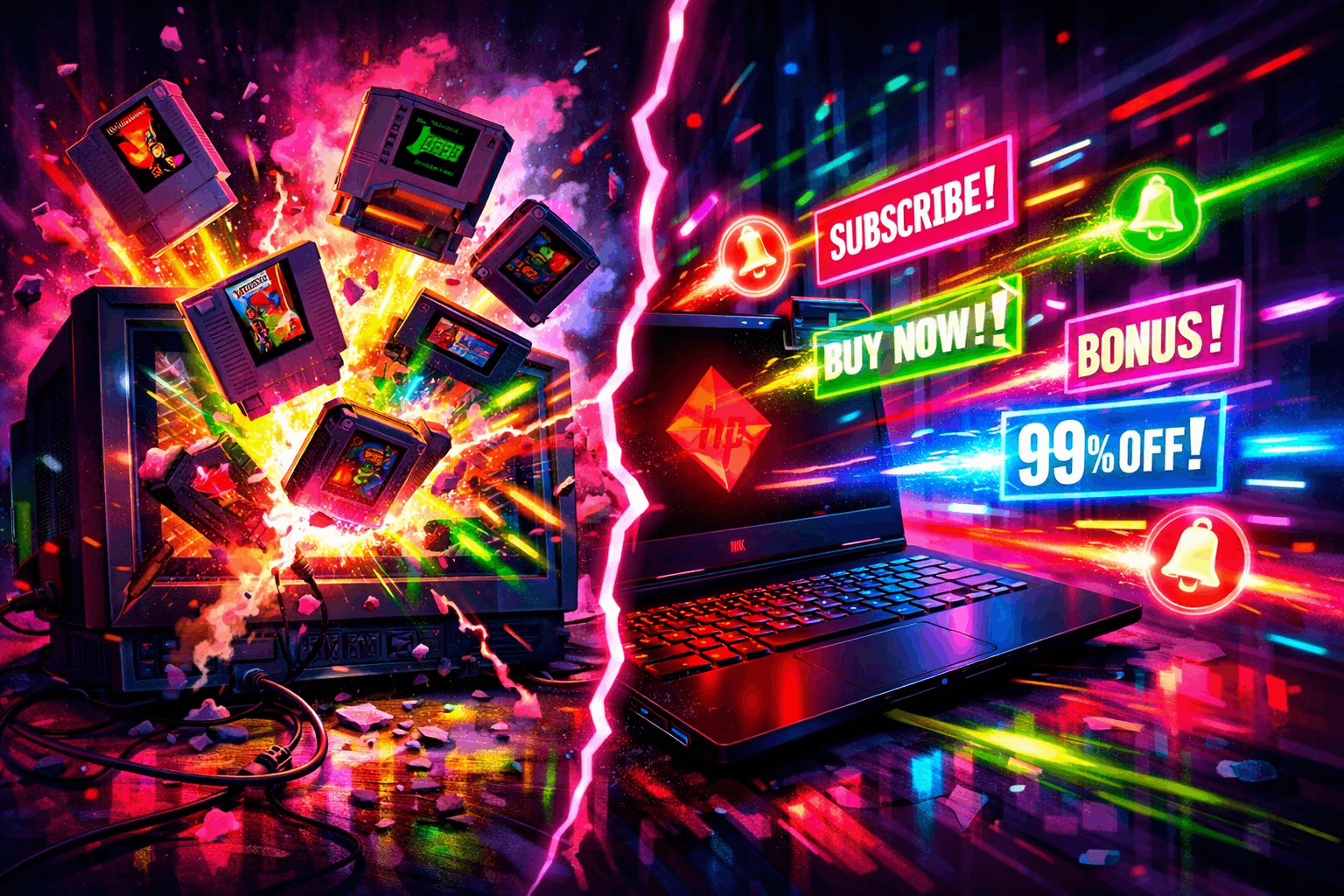
This isn’t just about laptops. The same forces that turn hardware into a service have already hollowed out game ownership. Once you could buy a cartridge, slap it in, and own that little plastic kingdom forever; now downloads are licences tied to accounts, and licences can be revoked, restricted, or vanish when a publisher pulls a title. Services like Microsoft Game Pass and Amazon Luna are brilliant for variety and impulse play, but they normalize access over ownership: you don’t own the game, you rent the right to play it while the service hosts it. Cloud streaming takes that further — the game runs on someone else’s servers, you stream the pixels, and your access depends on a subscription and the vendor’s catalog decisions. The cultural consequence is that collecting becomes ephemeral: your shelf of boxes is replaced by a list of icons that can be edited by a corporate hand. That’s convenience, yes, but it’s also a transfer of control from player to platform.
There’s a boss‑fight name for this slow pivot: enshittification. It’s the corporate tactic of turning once‑simple purchases into recurring revenue machines and then tuning the product to extract more value from you. Hardware subscriptions are textbook enshittification. Where you used to buy a machine, own it, and sell it later, you now pay forever for access. Vendors remove buyout options, add early‑termination penalties, and keep control of refurbishment and resale. Convenience becomes dependency when the terms are designed to keep you paying and the device never becomes your asset. This is the same logic that turned games from cartridges you owned into licences you rent. The result is a market where both hardware and software are increasingly framed as services — shiny, convenient, and ultimately controlled by the platform. You get the dopamine of instant access; the platform gets the steady drip of subscription revenue and the power to decide what stays on the shelf.
HP’s consumer and OMEN subscriptions are polished, useful, and dangerously seductive, but they are also a symptom of a larger problem. They are perfect for people who treat hardware like a service — streamers who cannot afford a single day of downtime, tournament organizers who need guaranteed replacements, and gamers who want to chase the latest GPU without fronting a king’s ransom. They are a raw deal for collectors, bargain hunters, and anyone who values ownership, resale value, or the right to mod and tinker without vendor permission. The subscription sells convenience and peace of mind; it does not sell an asset. If you want to be a subscriber — to pay for uptime, support, and annual upgrades — HP’s program is a tidy, well‑executed option. If you want to be a collector — to buy, own, and someday sell or trade — save, buy on sale, or wait for the one‑year‑old market to cough up a bargain. And remember: in a world where games are licences and hardware is a service, the real rebellion is owning something that you can keep, trade, and pass on.
Right now could be a turning point and you need to decide. Are you a collector or a subscriber?